Ryan Martinez
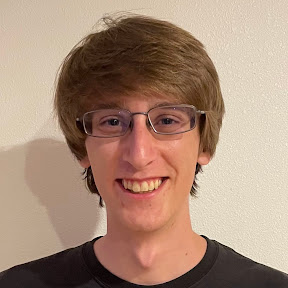
About me
I am a current PhD student in PDEs at UC Berkeley working under Daniel Tataru. I completed my BS at Harvey Mudd College in Math. My interests are in Dispersive PDEs, Harmonic Analysis, Numerical Methods, and Music (music is mostly separately but not always!)
Publications
“The Modified Energy Method for Quasilinear Wave Equations of Kirchhoff Type.” arXiv preprint arXiv:2501.06384 (2025), accepted for publication in Transactions of the American Mathematical Society, Series B
“On Good Infinite Families of Toric Codes or the Lack Thereof,” with Mallory Dolorfino, Cordelia Horch, and Kelly Jabbusch (U. Michigan Dearborn) , published in INVOLVE https://doi.org/10.2140/involve.2024.17.397
“Algebraic Invariants of Knot Diagrams on Surfaces,” HMC Senior Thesis 2022, https://scholarship.claremont.edu/hmc_theses/260
Current Research
My research is in low regularity nonlinear dispersive partial differential equations. In my recent work “The Modified Energy Method for Quasilinear Wave Equations of Kirchhoff Type,” I used a novel extension of the Modified Energy Method of Hunter, Ifrim, Tataru and Wong involving infinite order corrections to the linear energy of the system. This extension seems to arise as a necessary solution strategy to understanding long time behavior of nonlinear dispersive equations specifically at low regularity where high frequency data is non-perturbative. Currently, I am working on using this method to prove that up to the critical regularity (the lowest regularity where the problem is well-posed) 1D defocusing cubic nonlinear Schrödinger equation exhibits global existence (which is only known in special “completely integrable” cases) and dispersion (which is still unknown at low regularity). More info on this is in the abstract of my recent talk on progress in this direction at UW Madison.
Talks
PDE Seminar (University of Wisconsin, Madison), Fall 2025
Dispersive Estimates for Non-integrable 1D Defocusing Cubic NLS at Sharp Regularity
Abstract: We present work, still in progress, with Mihaela Ifrim and Daniel Tataru, which proves a priori global in time $H^s$, global $L^6$ based Strichartz estimates, and global bilinear spacetime $L^2$ estimates for non-integrable 1D defocusing cubic NLS with small initial data at the sharp regularity $H^{s}$, $s > -1/2$, with mild assumptions on the nonlinearity. This adds to the larger conjecture of Ifrim and Tataru that 1D defocusing cubic dispersive flows are globally well-posed and have dispersive estimates. In $L^2$, this problem was well understood by Ifrim, Tataru by using a modified energy method in a frequency localized setting. However, below $L^2$ there are several challenges. First, Christ, Colliander, and Tao show that the initial data-to-solution map fails to even be uniformly continuous locally in time below $L^2$, making the problem quasilinear. Thus, we cannot expect the problem to behave linearly at any time scale. For the completely integrable problem, access to conserved quantities has made the problem accessible below $L^2$. A priori local in time $H^s$ estimates were proved by Christ, Colliander, Tao for $s > -1/12$ and by Koch, Tataru for $s > -1/4$. These were extended to global in time estimates for $s > -1/2$ by Koch, Tataru and separately Killip, Visan, Zhang. Recently, Harrop-Griffiths, Killip, and Visan proved global well-posedness in the sense of continuous dependence for the problem in the sharp space. Our work supplements their work by in addition providing global $L^6$ and bilinear $L^2$ estimates, the first dispersive estimates known for this problem, and does not depend on the integrability of the system. The main challenge of this work is that the modified energy method used by Ifrim and Tataru at $L^2$ fails at high frequency below $s = -1/3$. To overcome this we use an infinite series of corrections.
Harmonic Analysis and Differential Equations Seminar (UC Berkeley), Fall 2024
Normal Forms, the Modified Energy Method, and an Extension
Abstract: The method of normal forms was introduced to PDEs by Shatah, who used it to study the long time behavior of semilinear Klein Gordon equations and the method has been widely used in the context of semilinear problems. The modified energy method of Hunter, Ifrim, Tataru, and Wong extends the idea of normal forms to quasilinear problems. In this talk, we will discuss the method of normal forms, the related method of modified energy, and my recent work which extends these in a novel way. The aim is to give a selection of nonlinear PDEs which demonstrate in detail how these methods are used, why they work, and what gains they achieve.
Erwin Schrödinger International Institute (University of Vienna), Summer 2024
The Modified Energy Method for a Nonlocal Quasilinear Wave Equation
Abstract: In this talk I will focus on how the Modified Energy Method of Hunter-Ifrim-Tataru-Wong can be applied in situations where it is unclear what normal form transformation to use. We will use a nonlocal, quasilinear wave equation of Kirchhoff type, which I and Tataru have been working on to illustrate the method. In this problem the gain is an enhanced cubic lifespan for small initial data in. Previously smallness was only guaranteed on a quadratic time scale and depended on the initial data in.
Harmonic Analysis and Differential Equations Seminar (UC Berkeley), Fall 2023
Wellposedness for Quasi-linear Problems and the Modified Energy Method
Abstract: We give an exposition of the Hadamard wellposedness and explain the modified energy method through the use of the Kirchhoff type Wave Equation as an example. We use the ideas from Daniel and Mihaela’s “Local Wellposedness for Quasilinear Problems: A Primer” as well as from their work with John K. Hunter and Tak Kwong Wong, “Long Time Solutions for a Burgers-Hilbert Equation via a Modified Energy Method.”
Projects
Black hole project
https://github.com/ryanmart00/BlackHole
A simulation of the geodesics of the Schwartzschild spacetime. A gif example is in the link above!
This still needs some work (light travels “instantly” to see the curvature instead of flowing along the manifold along null geodesics)
Teaching/Mentoring
Multivariable Calculus Graduate Student Instructor (Math 53, Berkeley) - involves running discussion/recitation sessions under Prof. James Sethian Fall 2022 under Prof. Maciej Zworski Fall 2023 under Prof. Sunica Canic Spring 2024 under Prof. James Sethian Fall 2024 under Prof. Emiliano Gomez Spring 2025
Honors Multivariable Calculus Graduate Student Instructor (Math H53, Berkeley), under Prof. Edward Frenkel Spring 2023 under Prof. Michael Hutchings Fall 2025
Directed Reading Program - a program that pairs undergraduates with graduate student mentors to get personal mentorship on advanced topics of the undergraduate’s choosing
on Dynamical Systems, Fall 2023
on deRham Cohomology, Spring 2024
on Quantum Computation, Fall 2024
on Dynamical Systems, Spring 2025
on Numerical PDEs, Fall 2025
UC Berkeley Fall 2024 Teaching Conference, quantitative discipline cluster leader - A three hour online teaching seminar to give confidence and pedagogical advice to new student instructors.
Proficient Languages
Programming Languages
C++: Data structures class (Harvey Mudd CS 70; A) Projects: https://github.com/ryanmart00/Hellscape is a work in progress video-game with a working 3D game engine built on Bullet and OpenGL; https://github.com/ryanmart00/BlackHole is a simulation of what geodesics look like in the Schwartzschild metric.
Python: Intro programming class (Harvey Mudd CS 42; Pass) Projects: https://github.com/ryanmart00/ToricVarietyCodes is some code to do some abstract algebra over finite fields for some computations for work related to my work with Dolorfino, Horch, and Jabbusch.
Julia: Graduate Numerical Partial Differential Equations (UC Berkeley Math 228B; A-) Worked problems: https://github.com/ryanmart00/PDENumerics
C: Computer systems class (Harvey Mudd CS 105: A)
Prolog: Computability and logic class (Harvey Mudd CS 81: A)
Java: Old experience from high school
Haskell: Less experience, completed the first 30 or so of the 99 Lisp problems for Haskell
Human Languages
English (Native)
普通话 (4 years of official study)
References
Daniel Tataru, University of California Berkeley, Professor of Mathematics tataru@math.berkeley.edu Relation: PhD Advisor
Mihaela Ifrim, University of Wisconsin, Madison, Professor of Mathematics ifrim@wisc.edu Relation: Collaborator
Sung-jin Oh, University of California Berkeley, Professor of Mathematics sjoh@math.berkeley.edu Relation: Instructor
Kelly Jabbusch, University of Michigan Dearborn, Associate Professor of Mathematics jabbusch@umich.edu Relation: Research Supervisor
Sam Nelson, Claremont McKenna College, Professor of Mathematics snelson@cmc.edu Relation: Instructor and Undergraduate Thesis Supervisor